Munitions and Machine Learning: An Explainer of the Major US Army Programmes
12.10.26

12.10.26


AUSA 2026 is now upon us. In a similar spirit to our earlier DVD 2026 blog, we have collated the key US Army programmes to keep an eye on for the coming years.
We have split these programmes into five different categories:
We start this blog off with a bang with the key munitions programmes – pun intended!
Munitions
Dark Eagle Long-Range Hypersonic Weapon (LRHW)
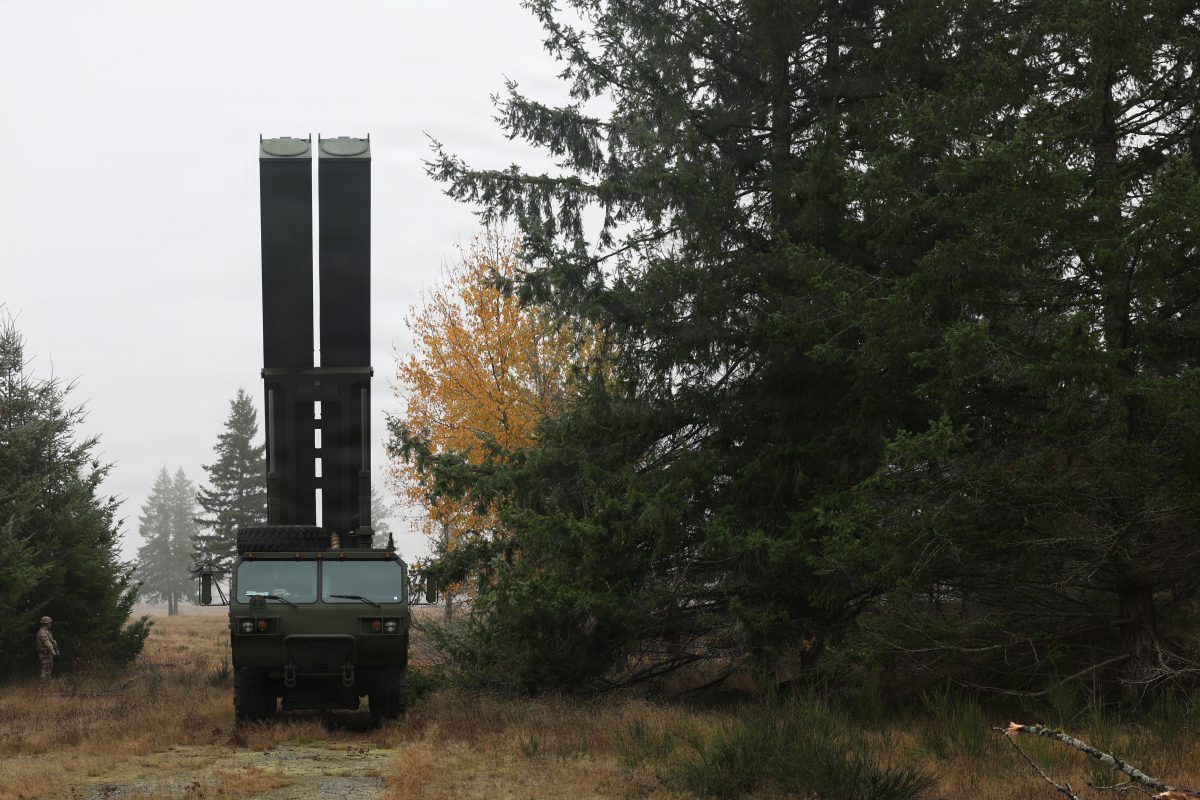
© US Army/Brandon Rickert
The Dark Eagle, officially designated as the Long-Range Hypersonic Weapon (LRHW), has been deemed as the Pentagon’s highest next-gen weapons system. The missile is a joint programme between the army and the navy, with the army version of the missile featuring a Lockheed Martin-made battery.
While the LRHW has been in operation for nearly a year, it is still working towards full operational capacity and is yet to be used in combat.
The missile is designed to strike heavily-defended, time-sensitive targets including command centres, air defence networks, missile launchers, naval facilities, and logistics hubs deep inside contested territory. It is also reported that LRHW can reach speeds of over Mach 5 (3,806 mph) with a range of 3,500 km (2,174 miles).
The LRHW programme also presents a clear reposturing of American strategic ambitions: the US sees Chinese counterbalancing as a threat to America’s global supremacy, so the procurement of a weapon with this range and purpose is perfect for the Indo-Pacific theatre.
However, it hasn’t been smooth sailing for LRHW. A number of reported delays since its original launch in 2019 have caused concerns among the Pentagon, which believes that China and even North Korea have produced more advanced hypersonic missiles.
But if the supply bottlenecks can be sorted out, then LRHW may prove a real asset in America’s missile arsenal.
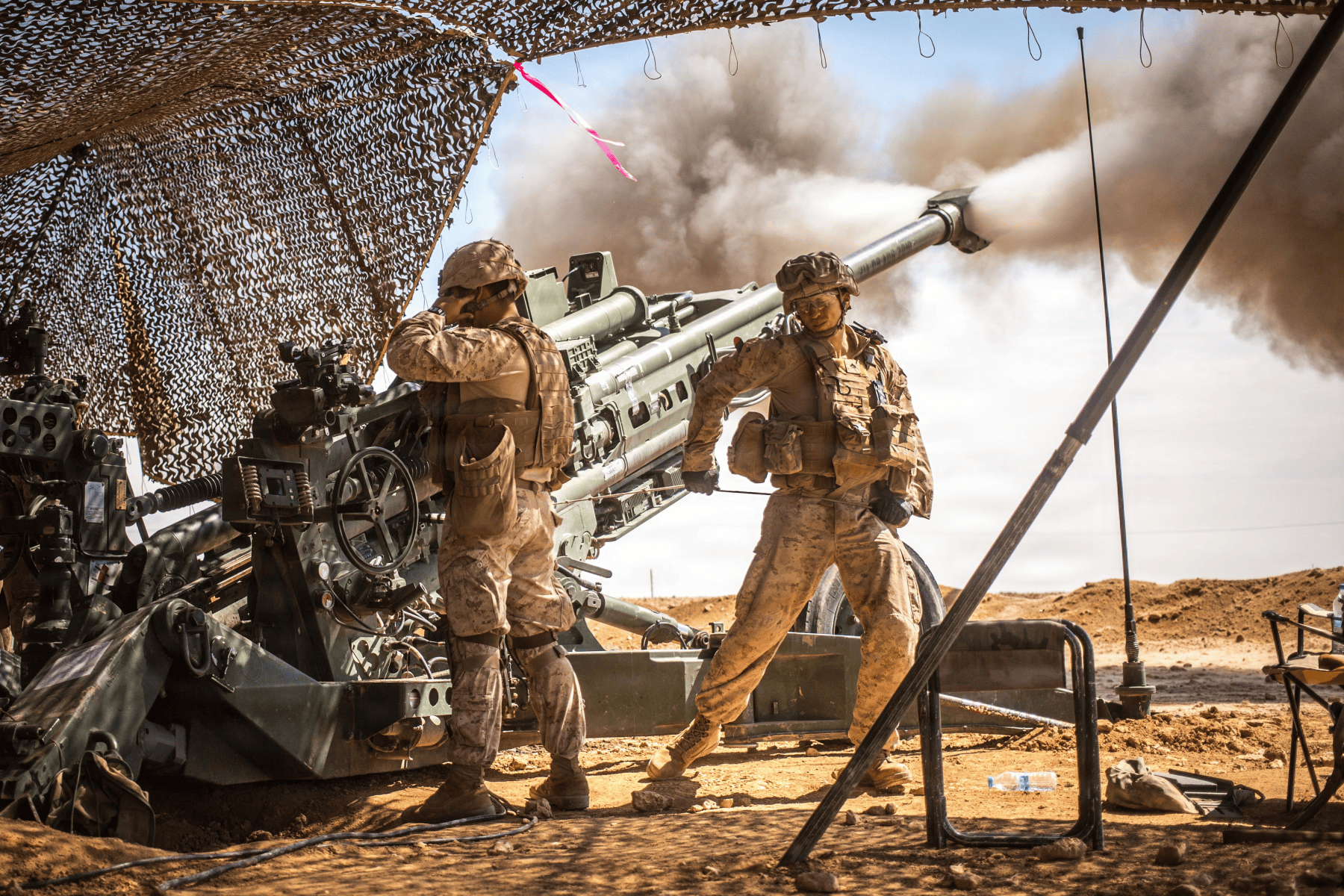
Mobile Tactical Cannon (MTC)
The MTC programme is an artillery similar to the UK’s procurement of RCH-155. An off-the-shelf programme, the US Army is looking to move away from its towed M777 with the US Army already procuring six prototypes of the South Korean made K9MH in August.
This signals two priorities that the army is looking for: mobility and range.
Mobility, of course, is in the name, but as the battlefield becomes more agile, the M777 cannot keep up. This is because the M777 requires a third party vehicle for transport, and with capabilities such as loitering munitions now ever-present on the battlefield, the M777 becomes a sitting duck. Furthermore, it only has a range of just under 20 miles, while other more modern artillery options have a longer range.
This is why the US Army decided to pursue the South Korean option, which has a top speed of 62mph and a range of 37 miles.
But it’s important to understand that Hanwha’s K9MH hasn’t yet won the contract, nor does it mean that the M777 will be fully replaced.
For now, it is important to keep on eye on the direction of this programme as it may be an insight into the doctrinal change of the army, as well as whether the boom of South Korean industry can continue its momentum.
PrSM Increment 4
Standing for Precision Strike Missile, PrSM is a next-generation advanced long-range missile programme. Increment 4 specifically is designed to hit moving land maritime targets at ranges of at least 1000km (621 miles), double that of the current army baseline.
The US Army has already signed agreements with five separate companies to provide prototypes:
The US Army also stated in a request for solutions that the missiles must have open architecture for new software and hardware.
Open architecture will be a theme throughout this blog. Reasonings for using open architecture differs programme to programme but specifically for this one, open architecture is required to prevent vendor lock-in and to keep the costs down.
Because this increment is supposed to be focused on mass produced, cheap to make surface-to-surface missiles, having an open architecture keeps costs down by allowing modernisation of the missiles to be cheaper than creating a whole new range of the same missiles.
Looking towards the future, if the true costs of this programme are able to remain low, then the increment 4 missiles can be classed as a success as they complement their more expensive counterparts.
Land Vehicles
XM30 Mechanized Infantry Combat Vehicle programme

© US Army/Aliyah Harrison
The XM30 is the new iteration of infantry fighting vehicles set to replace the 1980s-era M2 Bradley. Now in its fourth phase, the XM30 is being battled out by primes Rheinmetall and GDLS, with testing already underway with the aforementioned 1st Cavalry Division in the late part of this year.
The key features of the XM30 are its highly modular nature and that it can be unmanned. According to Congress documents, the main reason for the modular nature of it is to make the cost of modernisation cheaper, as well as to provide soldiers with better positional advantages, while simultaneously putting fewer soldiers at risk.
Specific capabilities outside of the ones required by the US Army have only been disclosed by Rheinmetall, with the German variant focusing on technology integration and crew survivability.
However, concerns remain surrounding the XM-30’s C-UAS capabilities. While it will have an organic active protection system, it doesn’t have an organic C-UAS system.
Depending on how testing goes this autumn, the XM-30 may prove to be operationally sound against UAS. Likewise, if the open architecture system allows for integration of C-UAS capabilities, then its survivability will be markedly improved among a backdrop of scepticism towards armoured fighting vehicles.
But if the XM-30 struggles to integrate any C-UAS capabilities, then, like that of the M1E3, armoured fighting vehicles may become obsolete, with next-gen and modernisation programmes for AFVs becoming redundant.
M1E3 Abrams Modernisation programme
As battlefields become more agile, heavier capabilities get penalised more often. Thus, armoured fighting vehicles (AFVs), and specifically tanks, need to be more mobile, and the M1E3 Abrams is a complete transformation of its old self.
With prototypes already delivered to the 1st Cavalry Division for testing, the GDLS-built M1E3 is aiming to weigh 60 tons, over 10 tons lighter than its predecessor.
This comes at a time when loitering munitions, kamikaze drones and missile systems are becoming faster and more accurate. Hence, the aim is to make the M1E3 a swifter, more fuel-efficient version of what it used to be.
Furthermore, the US Army wants to integrate more automation and open architecture into the M1E3, fully embracing the potential combat advantages of AI.
These benefits range from target prioritisation to environment awareness, all of which are incredibly useful when threats are everywhere.
And this isn’t just an isolated case. As you will see further into the blog, the US Army wants to be at the forefront of AI integration into the military.
But whether the lighter sibling of the Abrams family is actually a combat success is another story. If the M1E3 can properly integrate and utilise next-generation features, then it could turn the tide in a battlefield scenario.
However, if it remains slow and lacks the ability to outmanoeuvre the complexities of the modern battlefield, then it’ll be a significant waste of money.
C41 and AI
NGC2 programme
© US Army/Jonathan Reyes
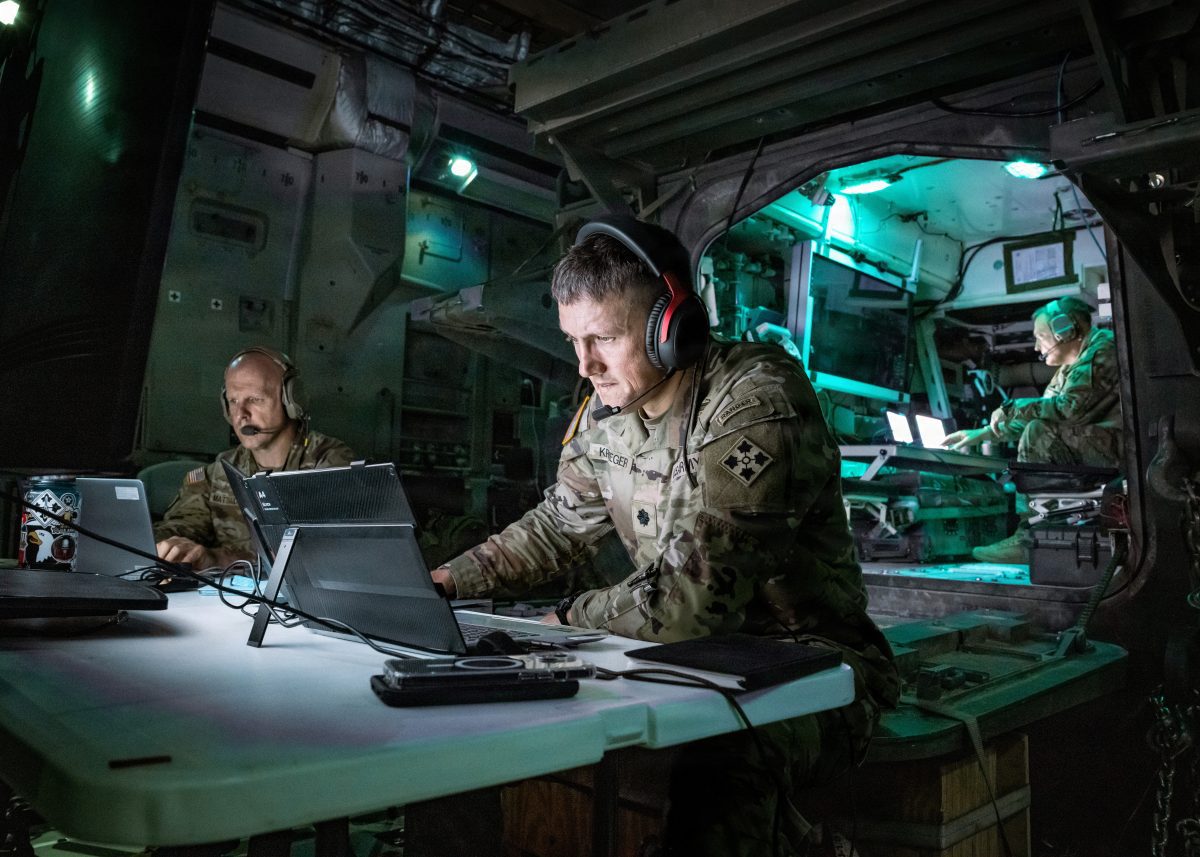
This sixty-plus company procurement programme is set to overhaul the existing C2 system currently used by the US Army.
With the current C2 ecosystem deemed as being fragmented by the army, the Next Generation Command and Control (NGC2) programme is an attempt to unify the whole system.
By combing C2 systems into a whole, singular entity, understanding of all of that data and the speed at which decisions can be executed are sped up.
Former Secretary of the Army Dan Driscoll stated that the biggest disadvantage on the battlefield is moving too slowly, which is what this programme aims at alleviating.
Rather than commanders having to switch between different systems to build a picture of their operational environment, they can use one system to get a better idea, allowing for faster decision making.
As the NGC2 is an integrated system with an open architecture, it is primed to respond to the constant changes on and off the battlefield. But what is yet to be fully understood is how resilient NGC2 actually is. While the use of private 5G networks, terrestrial and satellite links are valuable, they are only as useful as their resilience to cyber and electronic warfare.
If these links can hold up to the stress of real attempts to infiltrate the networks that lay the foundation for this capability, then the US Army will see even greater lethality.
Air defence
PAC-3 MSE UCA
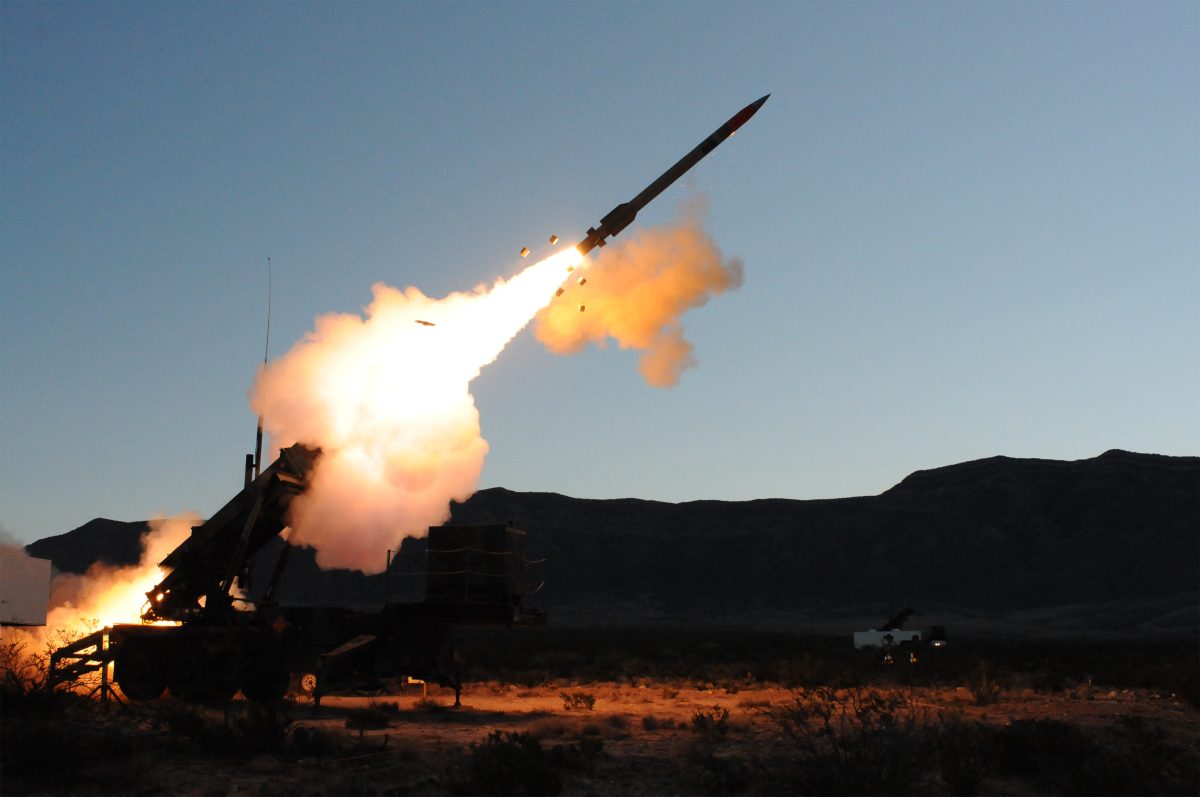
© US Army/Darrell Ames
The Patriot missile family is the premier anti-ballistic missile with the PAC-3 MSE variation widely regarded as one of the best of its kind in the world.
These missiles have been critical in Ukraine’s defence against Russian bombardment, but this has come at a cost for the US Army.
As Russian bombardment occurs nearly daily and the Iran war shows no sign of stopping, the number of Patriot missiles available is said to be around 800.
This has led to the Army handing Lockheed an eye-watering Undefined Contract Action (UCA) worth up to $53.8 billion.
A UCA allows for the production of a given capability to start before the negotiations have concluded.
In this instance it gives Lockheed Martin the potential to finance to more than triple its current production rate of PAC-3 MSE missiles from 600 a year to 2,000.
Part of this is to increase the Army’s depleted stockpiles, but is also to signal to industry to ramp up production of defensive surface-to-air missiles.
Industry is given the incentive to increase production as the army has shown that is not only in dire need of these missiles, but that it is also willing to shell out vast sums of cash to enable the procurement of said weapons.
This increase in production is set to create an extra 650 jobs at Lockheed’s Camden, Arkansas facility. However, the caveat to this is the timeline at which the PAC-3 MSE are supposed to arrive.
Production is expected to hit the 2,000-a-year benchmark in 2030, and with the rate that the army is using the PAC-3 MSEs, might be insufficient in the near term with conflicts in both Ukraine and Iran looking to continue indefinitely.
Aviation
Future Long-Range Assault Aircraft (FLRAA) programme

© US Army/Trevor Raney
Set to become operational in the 2030s, the selected Bell Textron MV-75 Cheyenne II tiltrotor is set to replace Sikorsky’s renowned UH-60 Black Hawk.
Being a tiltrotor, the Cheyenne II can take off and land vertically, while simultaneously being able to fly akin to a fixed-wing plane.
This capability makes the Cheyenne II more operationally flexible as it isn’t limited to the speed of a regular helicopter, nor requires the runway of a fixed-wing plane.
The FLRAA is currently in its Engineering and Manufacturing Development phase. Fielding is supposedly happening this year, even though there has been no official date set for when this will actually happen.
Concerns have also been raised on the use of a tiltrotor over a helicopter due to the health and safety record of the V-22 Osprey, the only operational tiltrotor in US service.
However, if the Cheyenne II can quell these concerns, then the operational advantages are so much greater. Dubbed to go ‘twice as far, twice as fast’, the Cheyeene II can reach speeds of 280 knots compared to the Black Hawk’s 151 .
And like most other programmes on this list, it features an open architecture aimed at increasing the operational lifecycle as well as reducing costs of modernisation.
However, if this programme is to be a success, Bell Textron must be able to deliver the capability on time to make sure that it can be fully tested and evaluated before it reaches low-rate initial production in 2028. If that happens, then the sky is the limit for the next generation of US Army aircraft.


Signatories of:


Members of:


Innovation House
Molly Millars Close
Wokingham
RG41 2RX