DVD 2026: From ASGARD to GRAYBURN, Five British Army Programmes to Watch
15.09.26


15.09.26


With DVD 2026 kicking off this week, Defence Media takes a timely look at some of the British Army’s top procurement programmes. The Army’s shopping list is significant, featuring an array of different technologies from vehicles, rifles and Artificial Intelligence (AI)-enabled systems.
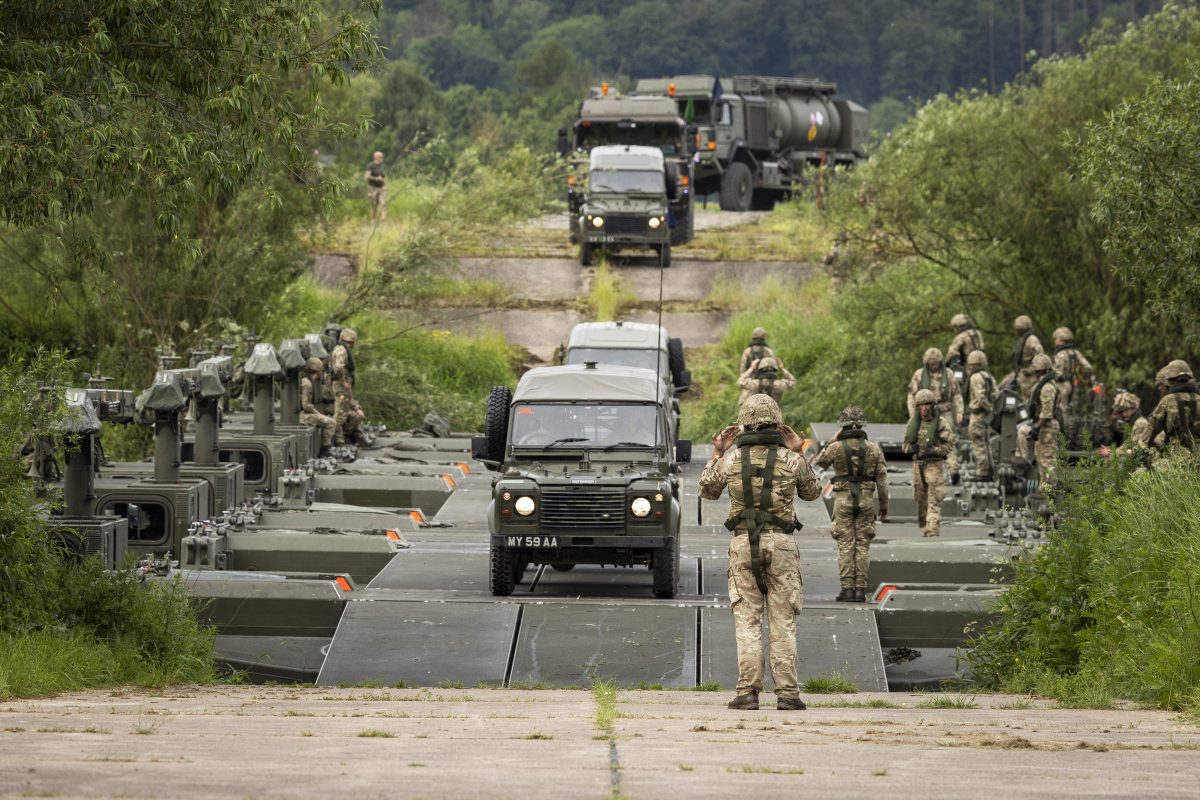
Starting off the list is the Light Mobility Vehicle project, LMV project for short. This has been widely anticipated by industry, both in the UK as well as international suppliers. The programme is set to replace the famous Land Rover, which has been so loyal to the British Army since the 1940s, and the Pinzgauer that have been active since 1995.
The new LMV project aims at enhancing interoperability, flexibility and operational effectiveness, all major components of the UK government’s Strategic Defence Review (SDR). Modernisation of this vehicle class will also be key for the UK’s ambition of maintaining a central role in NATO operations.
The government’s LMV tender states that there must be one common base platform for nine different variants, which include, but are not limited to:
There is also a need for the LMV to be compatible with new and emerging technologies, as for too long the British Army has been lagging in terms of innovation compared to its peers.
Whilst Land Rover is looking to retain the contract by offering its Defender Wolf series, the company faces stiff competition for the £2.5 billion contract from automotive giants such as Ford that is offering its Ranger series, as well as defence specialists Babcock, which is using a modified Toyota Land Cruiser coined the General Logistics Vehicle.
The successful company will be supplying the British Army for ten years with a possible ten-year extension, taking over the mantle of the iconic Land Rover.

As AI becomes more of a mainstay in the lives of many ordinary people, the role of AI within the British Army also continues to grow.
There is no bigger signal as to where the Army intends to go with AI than with Project ASGARD. Highlighted in the SDR, Project ASGARD is part of a wider push by the UK Armed Forces to introduce a so-called Digital Targeting Web worth £1 billion aimed at increasing lethality, and Project ASGARD alone is expected to double lethality within the Army through implementation of sovereign AI.
The premise of Project ASGARD is to use an AI-enabled targeting system whereby AI can use any sensor that it has access to and identify and prioritise targets. This has already been tested in live practice drills, most recently at NATO Exercise Hedgehog in Estonia, where it is said to have been able to identify soldiers from far distances. If completed fully under its original remit, Project ASGARD has the potential to not only tilt the battlefield in Britain’s favour but will also save the lives of British soldiers through its decision and priority mechanism.
As for now though, the full extent of Project ASGARD’s capabilities is yet to be seen, with development continuing. If Project ASGARD is a success, it could set a new precedent in the world of warfare.
Ukraine has been at the forefront of innovation and the use of drone technologies since the Russian invasion of 2022, and now the world has noticed. This has made drones – and ways to counter them – a hot topic for national armies. In 2026, the UK, France, Germany, Italy and Poland founded LEAP, or Low-Cost Effectors and Autonomous Platforms, with the goal of developing affordable effectors and autonomous systems.
The Ministry of Defence has already awarded £3.16 million to three SMEs with a standing in the UK, becoming the first member of LEAP to award contracts to the private sector. This will almost certainly not be the last contract to be handed out; the Ministry of Defence stated alongside its announcement of the contracts that it intended for the next phase of this programme to focus on scaling up production across the UK and other partner nations of LEAP.
Because this programme had an initial emphasis on UK-based SMEs, and the Ministry of Defence press release stated that it was reducing barrier to entry for relatively new firms, it isn’t far-fetched to say that the UK will be looking to replicate this formula, especially if these drones prove to be a proverbial bang for the MoD’s buck.
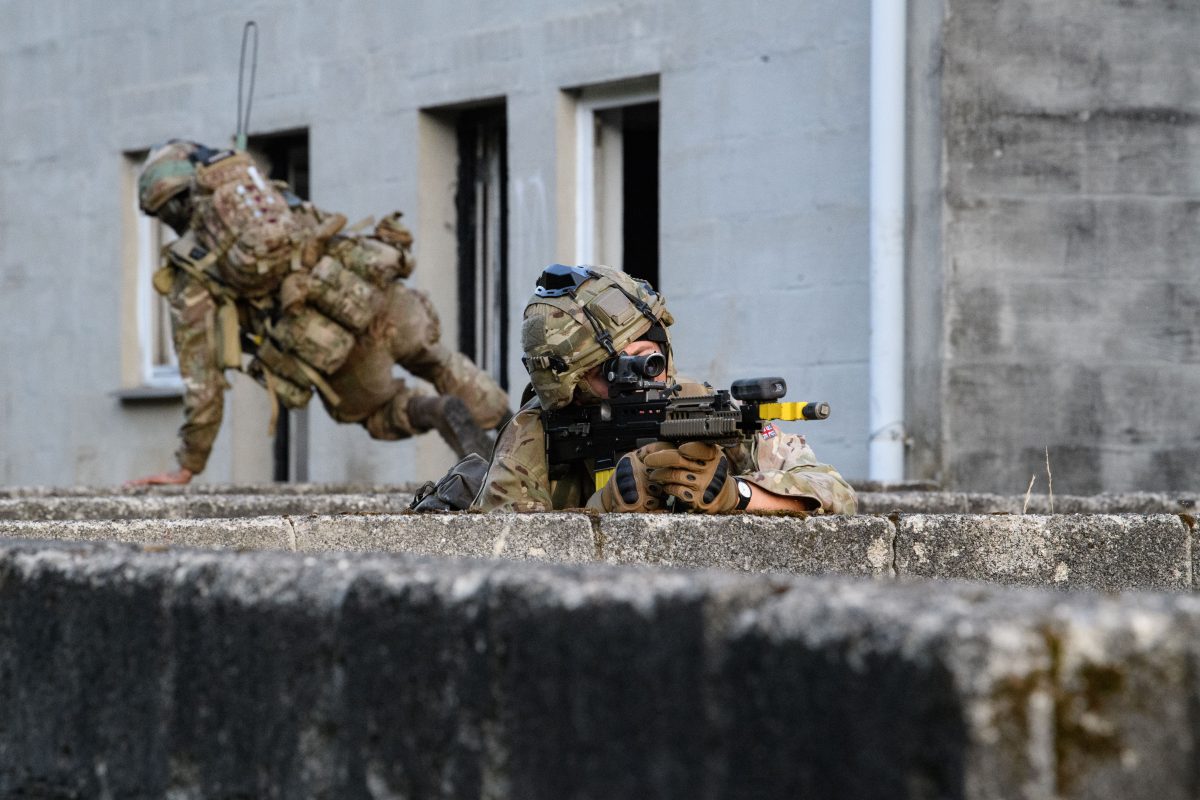
Another programme focused on phasing out legacy kit is Project GRAYBURN, which will introduce a new set of small arms to replace the SA80 family that the British Army currently operates. Like the LMV project, this programme also seemed to have excited the defence world. The programme will likely see an off-the-shelf solution being procured, however the government still wants the rifle to be produced in the UK, and it must deliver five distinct variants of rifles, namely:
While the main contenders are firearms behemoths Beretta, FN, Heckler & Koch, and Sig Sauer. However, this doesn’t stop UK businesses from getting involved, with Sig Sauer previously partnering with the UK’s largest rifle manufacturer, Accuracy International, and more recently the same company being acquired by FN Herstal. From a production standpoint, Project GRAYBURN aspires to enhance sovereign supply chains and generate local employment, while simultaneously providing a platform to export the rifles.
The official tender also stated that the rifles must meet certain requirements, such as high reliability across various climates (a theme throughout these programmes), providing sufficient lethality for contemporary and emerging body armour, employing signature reduction technology on unspecified variants, as well as being compatible with day and night optics.
As the programme is still in its concept phase, no official number nor estimation has been given by Westminster or Whitehall. Nonetheless, industry is very excited for this programme.
The Mobile Fires Platform, or MFP, programme aims to completely modernise Britain’s artillery. The programme will replace the AS90 howitzers that have been in operation since 1992 and have now been donated to Ukraine.
Already purchased are 72 Remote Controlled Howitzers (known as the RCH-155) totalling a near £1 billion price tag, all of which will be mounted on top of the Boxer 8×8 armoured vehicle. Produced by a joint venture between German defence stalwarts Rheinmetall and KNDS, the RCH-155 can fire eight rounds per minute with a range of 70km.
Furthermore, as the RCH-155 will be mounted on top of a Boxer with a top speed of 100kph, the British Army will benefit from additional manoeuvrability and operational flexibility, making it harder for enemy bombardment to strike them.
The programme, like most of the others mentioned, will have its production based in the UK, including the Boxers being mounted with the RCH-155, resulting in 500 jobs in Telford and Stockport being supported.
Likewise, an historically ailing domestic steel market will be bolstered by Rheinmetall that will be producing the RCH-155 and will aim to use steel produced by Sheffield Forgemasters. Furthermore, KNDS, which produces the Boxer, will be using its factory in Stockport to create a wholly British-produced artillery system.
Another angle to this programme is the Trinity House Agreement signed between the UK and Germany. This looks to deepen ties between the two nations’ defence industries, and this has fully come to fruition with the MFP programme. As a result, the UK now sees an increase in its interoperability with Germany, making the defence of continental Europe that bit stronger.


Signatories of:


Members of:



Innovation House
Molly Millars Close
Wokingham
RG41 2RX