What is the UK Defence Investment Plan? An Explainer.
22.05.26

22.05.26


The recent drumbeat of UK defence commentary points to a critical vulnerability, the impact surrounding funding uncertainty for industry, for the Armed Forces, and for wider national security.
Many stories have referenced the Defence Investment Plan (DIP), an eagerly awaited document that will set the course for defence spending over the next ten years. Its continued delay (as of writing in May 2026) is becoming an increasing frustration to many throughout the defence ecosystem, especially as it is viewed as a critical mechanism that translates the UK Government’s defence ambitions into funded programmes and commercial reality.
For many businesses, it is not just another government policy document, it will play a central role in informing investment and procurement decisions, not least for: skills, supply chains, partnerships and long-term technology development. Furthermore, it will reinforce the UK’s global position as a key defence player in an increasingly volatile and fractious world.
Industry is looking to the DIP for clarity on where investments will be directed, at what pace and through which delivery mechanisms.
In June 2025 the UK Government under Prime Minister Keir Starmer published the Strategic Defence Review (SDR), a paper intended to address an increasingly dangerous and contested geopolitical landscape. Shaped by lessons from the Ukraine-Russia conflict and heightened concerns around European security, the SDR outlined the need to rapidly develop technologies in key areas including autonomy, artificial intelligence (AI), cyber, and space capabilities.
Importantly, the SDR set out the strategic vision for the future of UK defence, while the follow-on DIP is intended to provide the practical implementation framework required to deliver it. In the SDR, it was stated that a new DIP would be developed to ‘deliver the SDR’s vision’, firstly ensuring that the strategy would be deliverable and affordable.
The DIP would also:
Serving as a financial and programmatic bridge between strategic intent and operational execution, the DIP effectively replaces the former Defence Equipment Plan format, adopted by the previous UK Government, which was used by the Ministry of Defence (MoD).
In the SDR, Defence Secretary Rt Hon John Healey MP noted that the DIP would be published in autumn 2025. It is common knowledge now that the timeline has slipped.
At the time of writing, there has been no set date for the release of the DIP. Reports have indicated that publication is imminent, however, the delay is likely to be the result of ongoing internal pushback from HM Treasury (the UK’s economic and finance department) on how much can be committed to defence spending and how it will be funded.
Media reports suggest that a £18bn uplift will be the result of the funding impasse, still £10bn short of a £28bn shortfall identified by the MoD in its internal assessments but a sizeable increase nonetheless. The £18bn will ensure that the SDR recommendations (62 in total) can be enacted, however, any additional funding gaps will have to be met with ‘efficiency’ drives from the department.
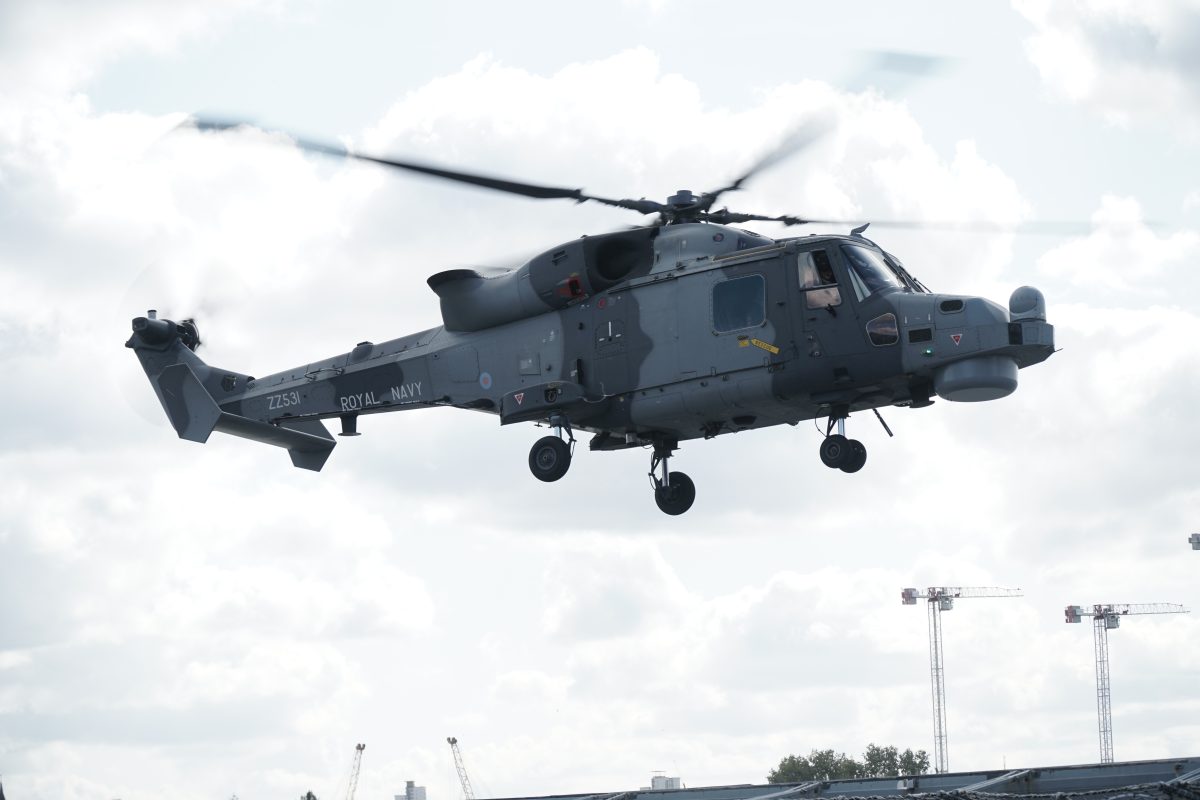
The Royal Navy’s Wildcat is manufactured by Leonardo in Yeovil (Photo: Defence Media)
In 2024, the Labour Party came into government with a strong defence message which centred around: increased investment, building and maintaining sovereign industrial capability, and delivering modern equipment to the British Armed Forces.
In 2025, Labour outlined it would spend 2.5% of GDP on defence by 2027 (above the NATO 2% target), with an ambition to increase that figure to 3% by the next Parliamentary term – no later than August 2029. There is also an appetite to increase further to 3.5% by 2035, which aligns with wider NATO spending targets.
This has been seen as a positive demand signal across industry and has led to many British companies ramping up defence activities and internal investments, as well as international companies setting up local entities to capitalise on this investment.
However, strategic rhetoric without resultant funding creates risk for businesses. The DIP’s delay has knocked the confidence of industry, many have now paused investment, slowed down recruitment, and warned that cuts could be next, or funding prioritised into other markets (including the US and Europe).
This has a significant impact on small-to-medium enterprises (SMEs) that heavily rely on supplying into larger OEMs/primes and integrators, with many struggling already thanks to ever-increasing operating costs.
Whilst long-term funding timelines remain under scrutiny; it would be remiss to discount the significant procurement activity currently moving through the pipeline.
In the land domain, the recent c.£1bn deal for 72 Remote-Controlled Howitzer 155mm artillery systems delivers an immediate step-change for the British Army. Beyond the tactical advantages, it activates the UK-Germany Trinity House Agreement, a key NATO ally, and locks in over 500 engineering jobs in Telford and Stockport and strengthens the UK Steel Strategy by using Sheffield Forgemasters.
The air domain saw a parallel milestone with Leonardo UK securing the anticipated £1bn New Medium Helicopter (NMH) contract. These 23 multi-role aircraft will streamline global lift operations while paving the way for integrated uncrewed wingmen, while also keeping full end-to-end helicopter manufacturing onshore.
Thirteen innovative British businesses have also recently been awarded contracts worth up to £4 million each to stimulate rapid procurement. The deal signalled how UK Government is accelerating the deployment of next-generation sovereign capabilities that span from quantum sensing and autonomous systems, to secure space manufacturing.
The question is not whether the UK government will increase defence spending; it will, eventually.
Rather, the issue is the failure to manage procurement funding effectively and provide the long-term economic and strategic certainty required by the industry and our allies. Most concerning of all is that this persistent uncertainty risks being actively exploited by our adversaries, including the likes of Russia.
If the UK government wants to deliver frontline capabilities at pace, build sovereign resilience, and accelerate novel technology adoption, the MoD must swiftly restore industry confidence. While the DIP and its accompanying funding boost are vital steps forward, the Treasury must allocate these funds immediately. Any delay risks creating a dangerous capability gap, not just within UK defence, but in the UK’s standing as a leading global military power.


Signatories of:


Members of:


Innovation House
Molly Millars Close
Wokingham
RG41 2RX